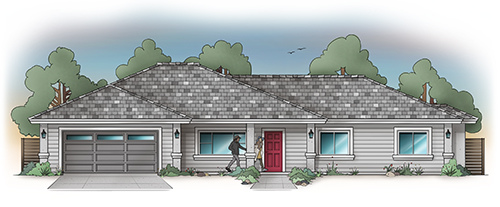








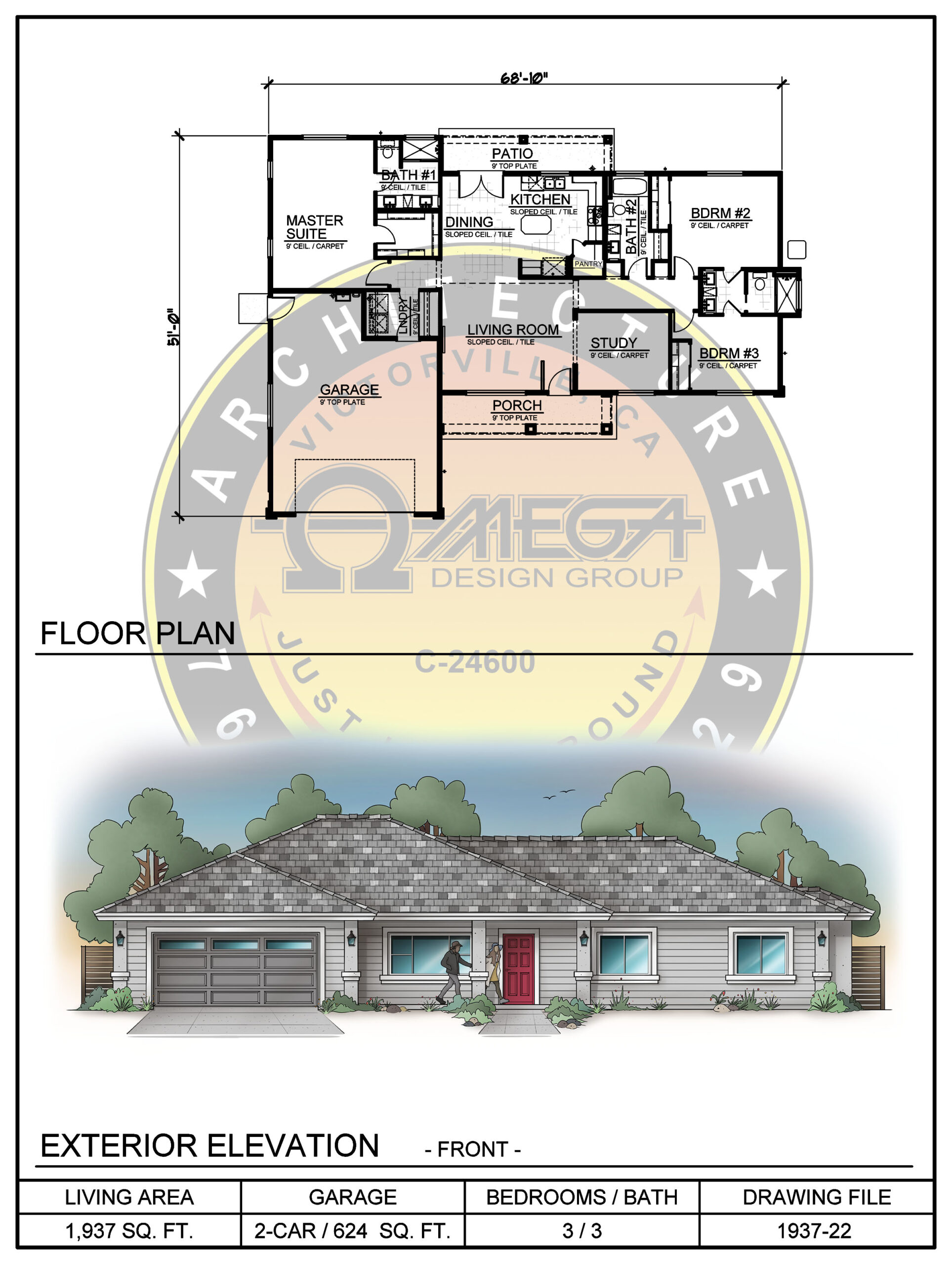
This thoughtfully designed 1,937-square-foot home offers three bedrooms, three bathrooms, a private study, and a spacious two-car garage. The open living room, dining area, and kitchen feature sloped ceilings, creating a bright and welcoming central space ideal for everyday living and entertaining. The primary suite is privately positioned with its own bathroom and generous closet space, while the secondary bedrooms are conveniently served by additional baths for added comfort and flexibility.
A dedicated study provides the perfect setting for a home office, library, or quiet retreat, and the separate laundry area adds everyday convenience. Covered front and rear patios extend the living space outdoors, while the attractive exterior features balanced rooflines, modern garage detailing, and a welcoming covered entry. With its flexible floor plan and refined curb appeal, this home is designed to accommodate both relaxed family living and modern lifestyles.
Structural calculations prepared by an engineer that verify the roof framing (trusses) can safely support all required loads, including the weight of the roof, wind, and seismic forces.
These are typically provided by the truss manufacturer and submitted with the plans for approval.
(California Energy Compliance)
A required report that shows a home or building meets California’s energy efficiency standards. It evaluates items such as insulation, windows, lighting, and heating and cooling systems to help confirm the project is energy-efficient and compliant with state requirements.
Including BMPs (Best Management Practices)
These plans show how the land will be shaped and graded so water drains properly away from structures and does not create flooding, ponding, or site drainage issues. They also identify erosion control measures, often called BMPs, such as silt fences, stabilized soil, or other protections used during construction.
(Water Quality Management Plan / Project-Specific Stormwater Plan)
These plans address how stormwater runoff will be handled on a property to help prevent pollution. They may include drainage systems, filtration areas, retention features, or other measures required by local agencies to keep runoff controlled and properly managed.
Detailed plans showing the layout and design of a fire sprinkler system. These are usually prepared by a licensed fire protection designer or contractor and submitted separately to help confirm the building meets applicable fire safety requirements.
Structural calculations prepared by an engineer that verify the roof framing (trusses) can safely support all required loads, including the weight of the roof, wind, and seismic forces.
These are typically provided by the truss manufacturer and submitted with the plans for approval.
(California Energy Compliance)
A required report that shows a home or building meets California’s energy efficiency standards. It evaluates items such as insulation, windows, lighting, and heating and cooling systems to help confirm the project is energy-efficient and compliant with state requirements.
Manual J, D, and S
These are engineering calculations used to properly design the heating and cooling system for a home.
Together, these help support comfort, energy efficiency, and overall system balance.
Including BMPs (Best Management Practices)
These plans show how the land will be shaped and graded so water drains properly away from structures and does not create flooding, ponding, or site drainage issues. They also identify erosion control measures, often called BMPs, such as silt fences, stabilized soil, or other protections used during construction.
(Water Quality Management Plan / Project-Specific Stormwater Plan)
These plans address how stormwater runoff will be handled on a property to help prevent pollution. They may include drainage systems, filtration areas, retention features, or other measures required by local agencies to keep runoff controlled and properly managed.
Detailed plans showing the layout and design of a fire sprinkler system. These are usually prepared by a licensed fire protection designer or contractor and submitted separately to help confirm the building meets applicable fire safety requirements.
Structural calculations prepared by an engineer that verify the roof framing (trusses) can safely support all required loads, including the weight of the roof, wind, and seismic forces.
These are typically provided by the truss manufacturer and submitted with the plans for approval.
(California Energy Compliance)
A required report that shows a home or building meets California’s energy efficiency standards. It evaluates items such as insulation, windows, lighting, and heating and cooling systems to help confirm the project is energy-efficient and compliant with state requirements.
Including BMPs (Best Management Practices)
These plans show how the land will be shaped and graded so water drains properly away from structures and does not create flooding, ponding, or site drainage issues. They also identify erosion control measures, often called BMPs, such as silt fences, stabilized soil, or other protections used during construction.
Detailed plans showing the layout and design of a fire sprinkler system. These are usually prepared by a licensed fire protection designer or contractor and submitted separately to help confirm the building meets applicable fire safety requirements.
Structural calculations prepared by an engineer that verify the roof framing (trusses) can safely support all required loads, including the weight of the roof, wind, and seismic forces.
These are typically provided by the truss manufacturer and submitted with the plans for approval.
(California Energy Compliance)
A required report that shows a home or building meets California’s energy efficiency standards. It evaluates items such as insulation, windows, lighting, and heating and cooling systems to help confirm the project is energy-efficient and compliant with state requirements.
Including BMPs (Best Management Practices)
These plans show how the land will be shaped and graded so water drains properly away from structures and does not create flooding, ponding, or site drainage issues. They also identify erosion control measures, often called BMPs, such as silt fences, stabilized soil, or other protections used during construction.
(Water Quality Management Plan / Project-Specific Stormwater Plan)
These plans address how stormwater runoff will be handled on a property to help prevent pollution. They may include drainage systems, filtration areas, retention features, or other measures required by local agencies to keep runoff controlled and properly managed.
Detailed plans showing the layout and design of a fire sprinkler system. These are usually prepared by a licensed fire protection designer or contractor and submitted separately to help confirm the building meets applicable fire safety requirements.
Structural calculations prepared by an engineer that verify the roof framing (trusses) can safely support all required loads, including the weight of the roof, wind, and seismic forces.
These are typically provided by the truss manufacturer and submitted with the plans for approval.
(California Energy Compliance)
A required report that shows a home or building meets California’s energy efficiency standards. It evaluates items such as insulation, windows, lighting, and heating and cooling systems to help confirm the project is energy-efficient and compliant with state requirements.
Including BMPs (Best Management Practices)
These plans show how the land will be shaped and graded so water drains properly away from structures and does not create flooding, ponding, or site drainage issues. They also identify erosion control measures, often called BMPs, such as silt fences, stabilized soil, or other protections used during construction.
(Water Quality Management Plan / Project-Specific Stormwater Plan)
These plans address how stormwater runoff will be handled on a property to help prevent pollution. They may include drainage systems, filtration areas, retention features, or other measures required by local agencies to keep runoff controlled and properly managed.
Detailed plans showing the layout and design of a fire sprinkler system. These are usually prepared by a licensed fire protection designer or contractor and submitted separately to help confirm the building meets applicable fire safety requirements.